Before any tax return, any payroll run, any financial statement, somebody has to keep the books right. This course teaches you bookkeeping properly from Pakistan — double-entry fundamentals applied directly in QuickBooks Online, the software Canadian firms actually use — so you can take a business's messy records and turn them into clean, reliable books.
Canadian bookkeeping training — taught with Canadian examples and software.
Apply now — our counselor will contact you on WhatsApp within 1 working day.
Ask any tax preparer what slows them down and you'll hear the same answer: bad books. A T1 or T2 return is only as good as the records behind it, and most small businesses hand over a mess — unreconciled bank accounts, invoices entered twice, expenses with no receipts, a year of transactions nobody has looked at since January.
That's why bookkeeping is the steadiest work in accounting. Tax has a season; bookkeeping has a month, every month. Every business with transactions needs its books kept, reconciled, and reported — and firms pay for that work all year round. Learn it in QuickBooks, the tool Canadian firms standardize on, and you hold the skill everything else in accounting is built on.
Bookkeeping is the honest starting point; everything else builds on it.
You know the work, now learn it in the software clients ask for by name.
Stop drowning in your own records, or at least understand every number in them.
Monthly bookkeeping clients stay for years, not one season.
Clean books are what make correct tax returns possible; this is the other half of the skill.
Five modules that follow a real business month. You'll work in a practice QuickBooks company from the first week — entering, reconciling, correcting, and reporting — because bookkeeping is a skill you learn by keeping books, not by reading about keeping books.
What double-entry actually means, and why every transaction touches two accounts. Debits and credits without the confusion: assets, liabilities, equity, income, expenses, and which side each one lives on. The chart of accounts — how firms set one up, and how a bad one creates a year of pain. Journals and ledgers, and how QuickBooks handles both behind the scenes.
The transactions a business actually has, every day: invoicing customers, recording sales, entering supplier bills, paying them, receiving payments, and handling cash. Entering each one correctly in QuickBooks — and, just as important, spotting the ones entered wrong. Sales tax codes on transactions, in brief (the full treatment is in our GST/HST course).
The discipline that separates a bookkeeper from a data-entry clerk: reconciling every bank and credit card account, chasing the differences, and fixing them properly instead of plugging them. Adjusting entries — prepaids, accruals, depreciation in brief. The month-end close checklist, done in order, until it becomes a habit.
Accounts receivable aging: who owes what, for how long, and what to do about it. Accounts payable aging: what the business owes, and when. Customer and supplier records kept clean. Inventory basics in QuickBooks — what it tracks, what it doesn't, and where beginners go wrong with it.
The reports that actually get used: trial balance, profit & loss, balance sheet, and what each one is telling you. Spotting the red flags — a negative bank balance, an uncleared suspense account, a receivable that will never be collected. Preparing clean books for year-end and for the tax preparer, and how QuickBooks Accountant access works when a firm reviews your books.
Each module ends with practice work in a full QuickBooks company file: a month of real-style transactions to enter, bank statements to reconcile, errors deliberately planted for you to find, and reports to produce at the end. Your work gets checked line by line — because in bookkeeping, the expensive errors are the quiet ones: the duplicate entry nobody noticed, the reconciliation forced to balance, the expense posted to the wrong account for eleven months.
The learning continues into the 3-week supervised co-op: remote work on actual client files under NDA, with a Canadian tax expert at FilingTaxes.ca reviewing 100% of your work, file by file — and an experience letter at the end.
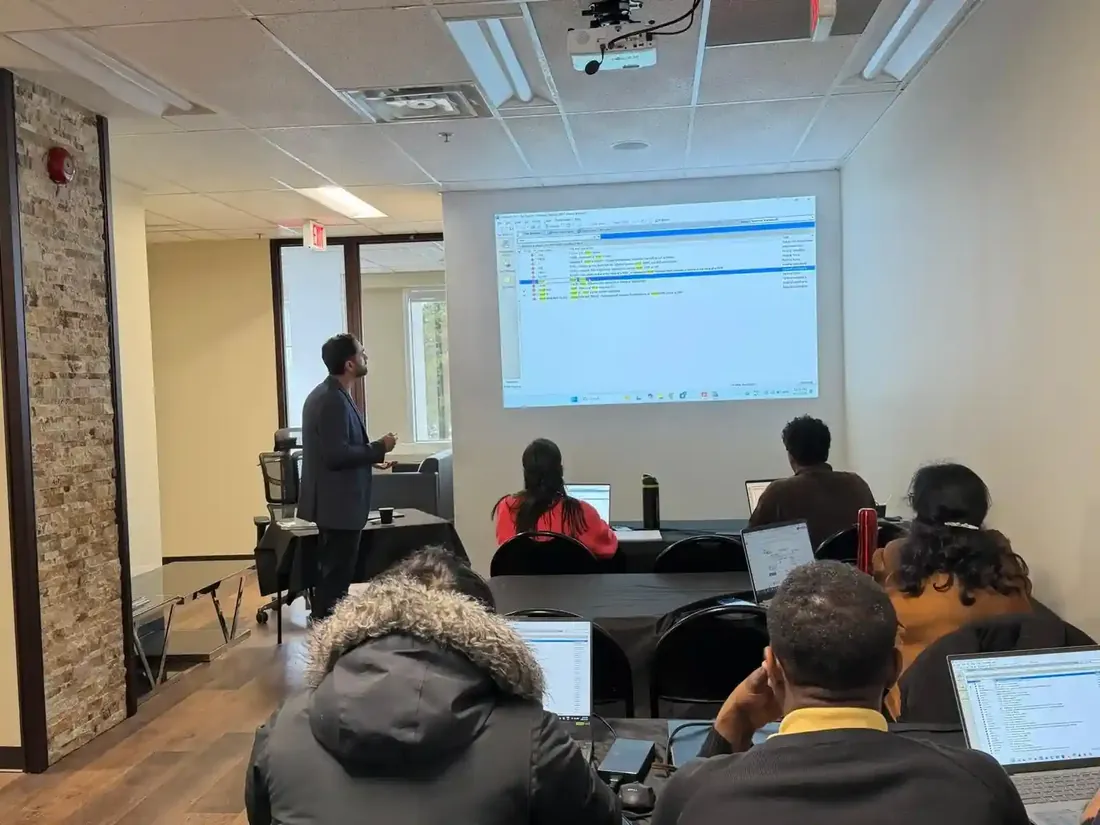
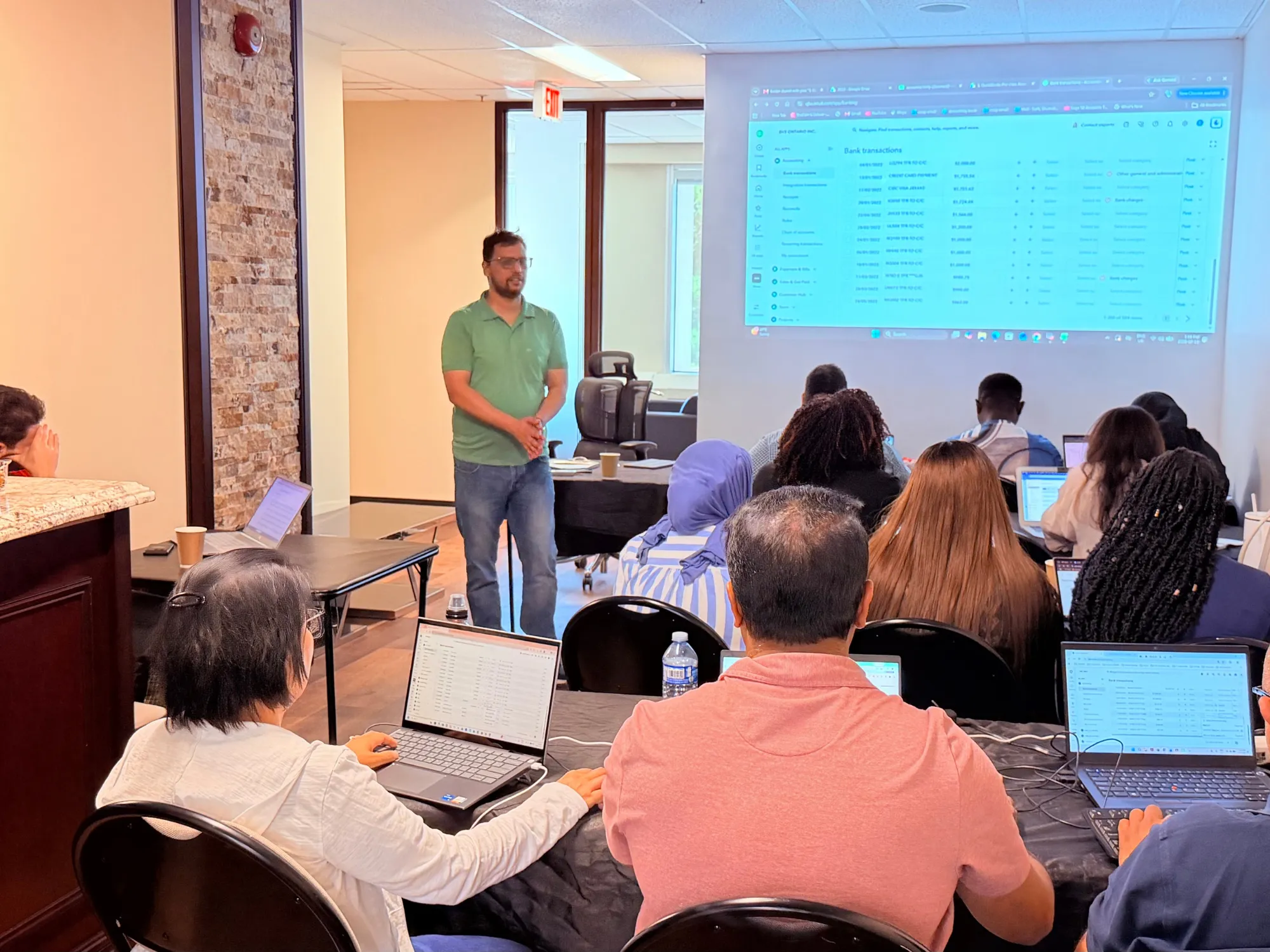
Bookkeeping is taught the way it's done: live, on screen, inside QuickBooks, with real transaction data in front of you. No pre-recorded lectures to watch alone — you join the class, work the company file with the instructor, and ask the moment something doesn't balance. Batch timings are fixed once enrollments are in, and your counselor confirms yours before the first class.
Live classes (Urdu/English) — All five bookkeeping modules, with practice company work throughout.
Full-program students — Continue into the 3-week remote co-op after the course modules.
After completion — Certificates as applicable (see FAQ).

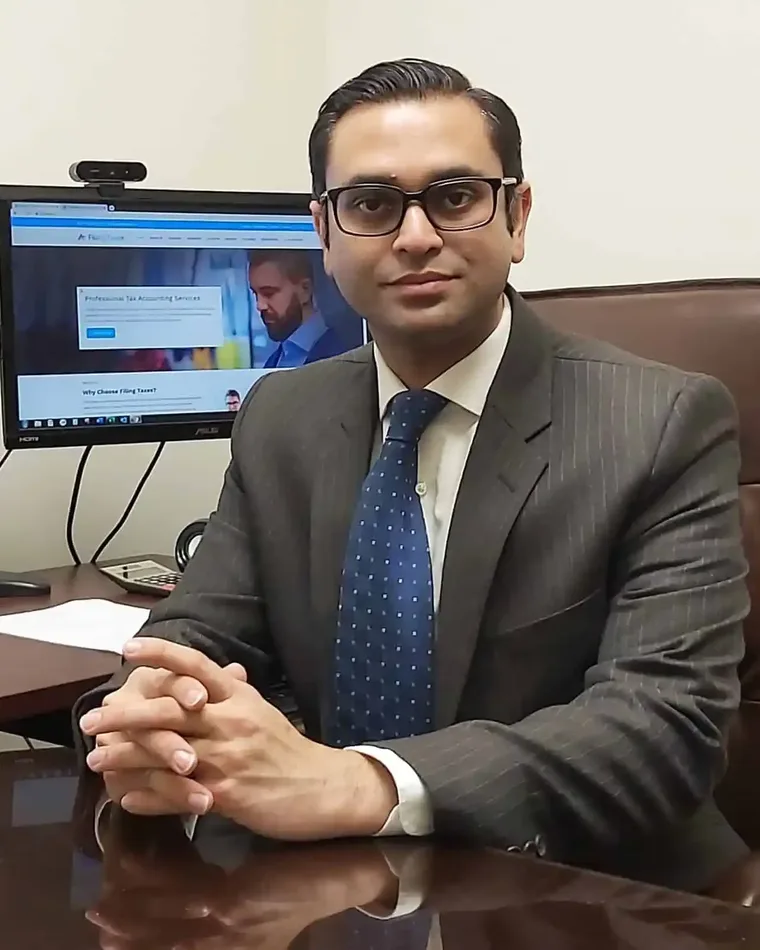
Salman Rundhawa — MBA in accounting, 14+ years in Canada, from junior accountant to assistant manager at firms including Hydro One and Diamond Tree Accounting (Barrie). He has kept books, prepared T1 and T2 returns, and handled payroll and GST/HST for real clients — and he teaches this program himself through Get Trained Get Hired in Canada.
Full ProfileWe don't list the fee on the website — we explain it. When you apply, our counselor (Urdu/English) calls you back, walks you through exactly what the fee covers, the batch schedule, and answers every question you have. Then you decide. No pressure, no fine print surprises.
Take the first live class. If the program isn't for you, request a full refund within 48 hours — no questions asked. After that, the fee is non-refundable, but you can transfer once to the next batch free of charge.
More questions? Our counselor answers in Urdu or English.
Tax returns, payroll, financial statements — all of them stand on books somebody kept right. Learn double-entry properly, learn QuickBooks the way Canadian firms use it, and practice on a real company file under review. Apply today — our counselor will call you back with the fee, the schedule, and honest answers to every question.
Fill this in and our counselor will contact you on WhatsApp within 1 working day.
Prefer to talk? Call 0307 8976064 or email info@accountantskill.com.