Debits, credits, journals, ledgers, trial balance, financial statements — the language every accounting course, every bookkeeping job, and every tax return is written in. This live-online course teaches it from zero, in plain Urdu & English, with real practice at every step — so that when you move on to bookkeeping, T1, T2, payroll, or GST/HST, you're building on rock instead of sand.
The starting point — no accounting background needed.
Apply now — our counselor will contact you on WhatsApp within 1 working day.
Here's the uncomfortable truth about most accounting training: it starts in the middle. Courses jump into tax returns and payroll runs assuming you already know what a debit is, why the books must balance, and what a trial balance is telling you. Students who don't know those things don't fail for lack of effort — they fail because nobody taught them the foundation.
This course is that foundation, taught properly and slowly enough to actually stick. No jargon without explanation, no step skipped because "you should already know this." By the end, debits and credits feel obvious, the accounting equation feels like common sense, and a set of financial statements reads like a story instead of a wall of numbers.
Zero accounting background, starting from the very first concept.
Struggling with the basics underneath the exam syllabus.
Moving into accounting and needing the language before the job.
Who want to actually understand their own numbers for once.
The on-ramp: do this first, and every later course gets easier.
Five modules in the order the subject itself is built. Each one ends with practice — worked examples, then problems you solve yourself and get checked on — because accounting is learned by doing entries, not by memorizing definitions.
What accounting is actually for: recording, organizing, and reporting what a business did. The accounting equation — assets = liabilities + equity — and why it must always balance, no exceptions. What counts as an asset, a liability, equity, income, and an expense, with real business examples for each.
The idea that makes everything else click: every transaction touches at least two accounts. Which side is debit and which is credit, for each type of account — taught with a rule you can actually remember, not a table you memorize and forget. Worked examples until the logic feels natural: a sale, a purchase, a payment, a loan, an owner's investment.
Where transactions get recorded first (journals) and where they live afterwards (ledgers). Posting, step by step, by hand — because doing it by hand once is what makes software make sense later. The chart of accounts: how it's organized, why the numbering matters, and how a messy chart creates a year of confusion.
The trial balance: what it proves, and what it doesn't. The adjustments that trip up every beginner — prepaids, accruals, depreciation in brief, and why "cash moved" and "expense happened" are not the same month. The month-end rhythm: the small, repeatable routine that keeps books honest.
The three statements, in plain language: profit & loss (did we make money?), balance sheet (what do we own and owe?), cash flow in brief (where did the cash actually go?). How the three connect to each other, how to spot when something is off, and how these statements feed directly into tax returns — the bridge to every course that comes next.
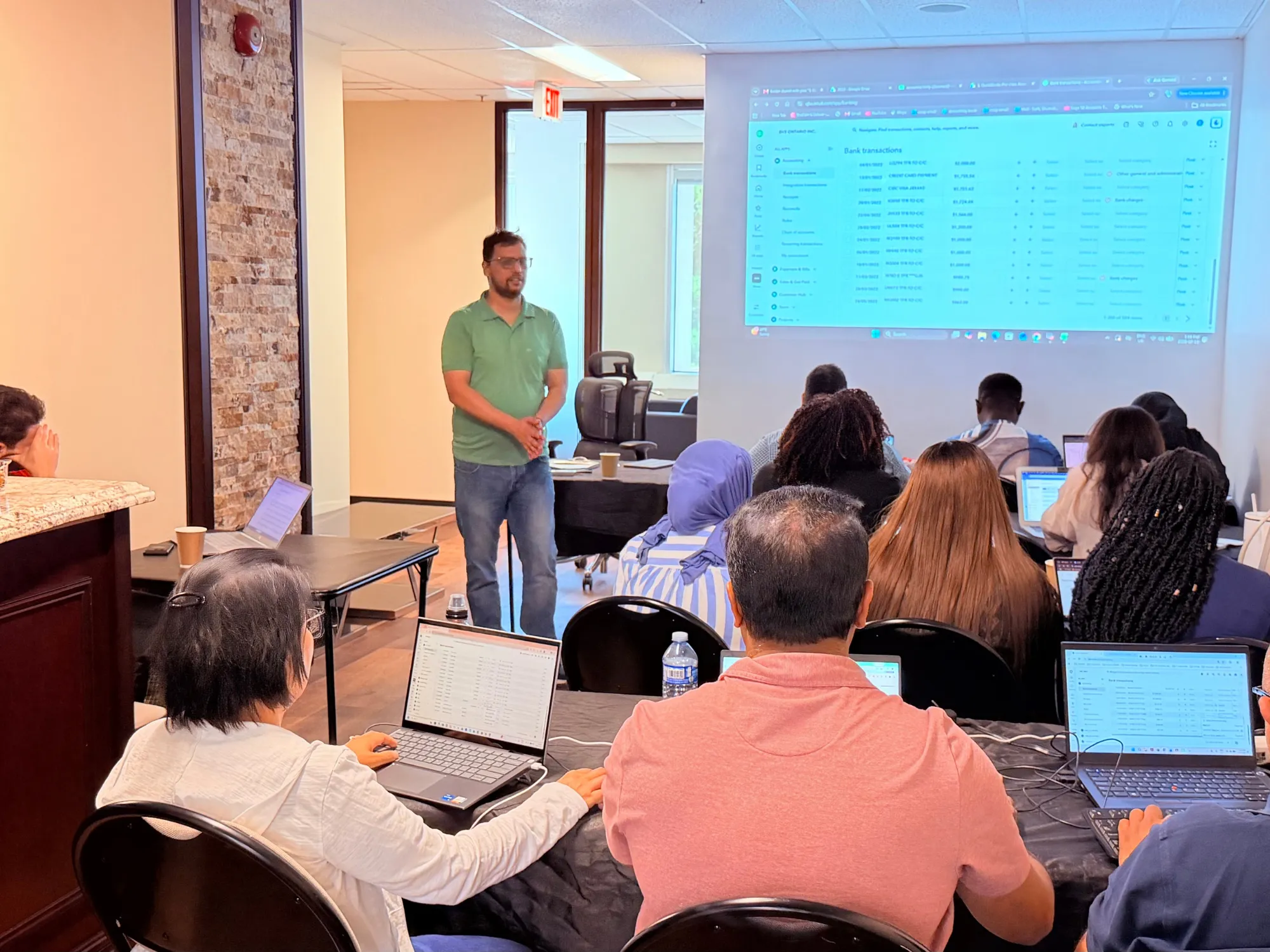
Each module ends with a practice set: transactions to record, accounts to post, a trial balance to prove, statements to prepare. Your work gets checked entry by entry — because in accounting, the misunderstanding that costs you later is never the big one. It's the small one: the debit that went to the wrong side, the adjustment nobody made, the equation that stopped balancing three steps ago and nobody noticed.
The learning continues into the 3-week supervised co-op: remote work on actual client files under NDA, with a Canadian tax expert at FilingTaxes.ca reviewing 100% of your work, file by file — and an experience letter at the end.
Fundamentals is taught the way it sticks: live, on screen, with problems worked in front of you and then worked by you. No pre-recorded lectures to watch alone — you join the class, try the entries with the instructor, and ask the moment something doesn't balance. Batch timings are fixed once enrollments are in, and your counselor confirms yours before the first class.
Live classes (Urdu/English) — All five fundamentals modules, with practice sets throughout.
Full-program students — Continue into the 3-week remote co-op after the course modules.
After completion — Certificates as applicable (see FAQ).

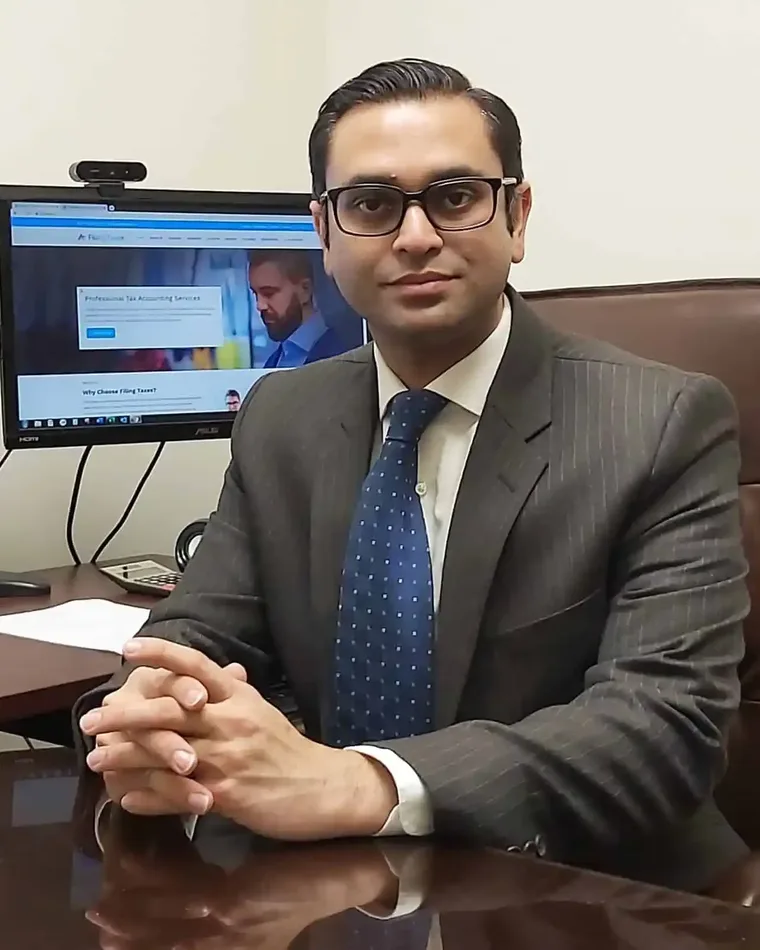
Salman Rundhawa — MBA in accounting, 14+ years in Canada, from junior accountant to assistant manager at firms including Hydro One and Diamond Tree Accounting (Barrie). He has taught accounting fundamentals to beginners in Canada through Get Trained Get Hired, and he teaches this program himself — patiently, in Urdu & English, until it clicks.
Full ProfileWe don't list the fee on the website — we explain it. When you apply, our counselor (Urdu/English) calls you back, walks you through exactly what the fee covers, the batch schedule, and answers every question you have. Then you decide. No pressure, no fine print surprises.
Take the first live class. If the program isn't for you, request a full refund within 48 hours — no questions asked. After that, the fee is non-refundable, but you can transfer once to the next batch free of charge.
More questions? Our counselor answers in Urdu or English.
Every accountant you admire once sat where you are now, staring at debits and credits and wondering if it would ever make sense. It does — when somebody teaches it properly, slowly, and in your language. Apply today — our counselor will call you back with the fee, the schedule, and honest answers to every question.
Fill this in and our counselor will contact you on WhatsApp within 1 working day.
Prefer to talk? Call 0307 8976064 or email info@accountantskill.com.